
How to manage humidity in a coastal property
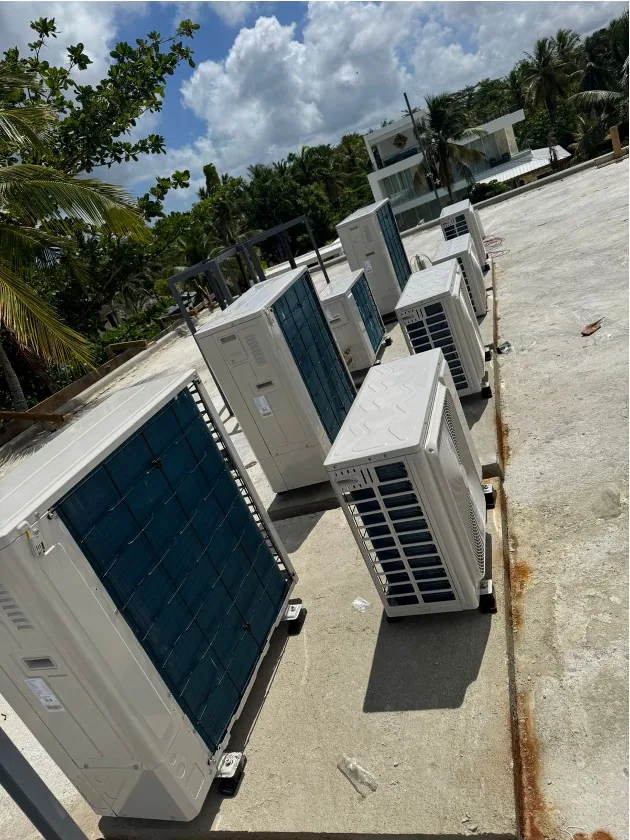
A coastal home can reach its cooling setpoint while cupboards smell musty and surfaces remain damp. Temperature alone is not a reliable moisture check. For a Dominican coastal property, the practical starting point is to record indoor conditions, find moisture sources and decide whether cooling, repairs or dedicated dehumidification are needed. Salt-related equipment corrosion is a separate issue, not something an indoor humidity target can solve.

Establish a humidity baseline in occupied and empty rooms
Use a hygrometer to record relative humidity and temperature in living spaces and rooms with recurring dampness. Avoid direct supply-air jets, sunlight and immediate steam sources. Compare morning and evening readings and periods with and without cooling; note showers, open terrace doors and rain. A comfortable reading beside a running unit does not describe a closed bedroom or the property after several vacant days.
EPA guidance recommends keeping indoor relative humidity below 60% where possible, ideally between 30% and 50%. Use that as general prevention guidance, not a local legal standard or a guarantee that mold cannot grow. Agree a feasible operating target with the designer based on indoor temperature, the building and available moisture-removal capacity. Sustained readings at or above 60%, or wet surfaces despite lower room readings, warrant investigation.
Discuss indoor conditions with an HVAC designerFind the water source before adding equipment
Map where and when water appears. Rain-linked stains suggest a roof or facade leak; water beneath an indoor unit may point to its drain or pan. Condensation forms when moist air meets a surface cold enough for water to collect, including inadequately insulated pipes or cold grilles. These problems can coexist. A dehumidifier cannot repair a roof leak, and painting over a damp stain conceals rather than removes the source.
Arrange checks of plumbing, window and door seals, cold-pipe insulation and the building envelope as appropriate. Do not block required air inlets to make the home feel sealed. Ventilation and moisture control need to work together. Photos and timing records help distinguish building repairs from HVAC work and prevent a cooling replacement from being proposed for an unresolved water-entry problem.
Arrange an AC drainage and operation checkSeparate temperature control from moisture removal
Cooling removes moisture when water condenses on the coil and drains away. An oversized on/off unit may stop too quickly to do enough drying. Even a suitably sized system can have limited moisture removal when there is little temperature-driven cooling demand. A mini-split's dry mode is model-specific; it should not be assumed to hold a humidity target independently of room temperature.
If humidity remains high after leaks, drains and operation are addressed, ask about supplemental dehumidification. Compare water-removal ratings at their stated test conditions, the intended space, infiltration and occupancy rather than choosing only the largest litres-per-day figure. A portable unit adds heat to the room and needs a maintained tank or safe drain. Check its humidity control, placement and drainage before relying on it unattended.
Discuss a humidity-control strategyPlan for terrace doors, daily moisture and vacancy
Use appropriate outdoor exhaust for bathroom and cooking moisture and avoid drying laundry in enclosed rooms without moisture control. Opening windows does not necessarily dry a coastal property when incoming air carries more moisture. Limit prolonged terrace-door openings during cooling while preserving required ventilation. Air movement can improve comfort, but an ordinary fan does not remove water vapor.
For a vacation home or seasonal rental, agree an unoccupied operating plan rather than assuming that shutting everything off or setting the lowest temperature protects furnishings. Include humidity checks, drainage inspection and a local contact. Verify what happens after a power interruption, including restart behavior and any loss of alerts. Remote readings are useful only if someone can respond to rising humidity or a leak.
Plan maintenance checks while the home is vacantKnow when routine humidity control is no longer enough
Address wet materials promptly: EPA recommends drying water-damaged areas and items within 24 to 48 hours to help prevent mold growth. Widespread or hidden mold, contaminated water and suspected HVAC contamination require experienced professional assessment. Do not run a system known or suspected to be contaminated with mold. Moisture control does not replace necessary cleanup or remediation, and health concerns belong with a healthcare professional.
For an HVAC assessment, provide location, humidity and temperature records, photos, occupancy patterns and equipment details. Explain whether symptoms follow rain, open doors or vacant periods. Request a diagnosis separating moisture sources and a plan whose results can be checked with measurements. Assess sea-salt exposure and any manufacturer-compatible corrosion treatment separately; neither is a substitute for indoor moisture control.
Request an HVAC assessment of the propertyPlan comfort for your villa or apartment
Connect noise, zoning, humidity and finish decisions with a property assessment. Maintenance access should be part of the design, not an afterthought once ceilings are closed.
HVAC installation for villas and apartmentsDocumented projects
- Las Terrenas Villas
Integrated climate control with ducts and invisible slot diffusers. View the photographs and documented scope.
Share drawings, location, planned finishes and your priorities for noise, zoning and maintenance.
Request a technical evaluation